The Spokane River Listening Project

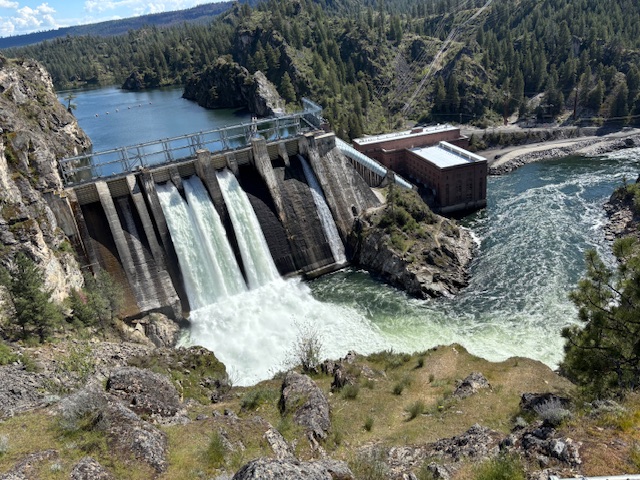
The Spokane River

The Center for Social Ecology and Public Policy, Inc., is pleased to initiate the Spokane River Listening Project in 2026. Our mission is to conduct a social-cultural assessment of residents in the Spokane River Basin as a result of toxins in the river.

Our questions include:

  • How do you and your family interact with the river?
  • What activities do you engage in on or near the river?
  • What problems do you see?
  • How aware are you of toxic levels in the water?
  • What special spots are the most important to you?
  • What are the best ways to communicate with you?

If you live in the Spokane River Basin and would like to communicate with us, we’d be happy to come visit with you or talk by phone. This river is embedded in the history and culture that is Spokane. We would love to hear from you.

Below is our Social Ecology team along with contact information. Thank you — and the River thanks you.

Spokane River landscape

Our Team

Kevin Preister

Kevin Preister

Executive Director, CSEPP

Kevin Preister has been engaged in Social Ecology projects for over 40 years, assisting government and corporate entities to understand and work effectively with local communities. From the timber wars of the Pacific Northwest, to right of way projects for new highways and infrastructure, to social programs that address citizen issues of poverty and neglect, Preister has sought to “learn community first” as the basis of new program and project development. He worked extensively with the U.S. Forest Service, the Bureau of Land Management and the International Right of Way Association, always seeking to understand local voices and to advocate for the concept of productive harmony. He is currently engaged in the Spokane River Listening Project under the auspices of the Department of Ecology, State of Washington.

kevinpreister@gmail.com 541.601.4797
Trish Malone

Trish Malone

Senior Associate

Trish Malone is a senior associate with expertise in successfully fostering citizen engagement toward creating sustainable change. Her background as a cultural anthropologist provides insight and sensitivity in connecting diverse groups of people and their place with their desire for culturally appropriate planning and implementation. Trish travels between Sonoma County, California and Hawaii where she oversees Pacific Rim projects. She has worked at every level of project engagement: project management, community field research, coordination between citizen groups and formal agencies, and facilitation of community events and meetings.

trish.malone@aol.com 541-531-5066
Clarice Paul

Clarice Paul

Tribal Community Outreach Coordinator

Clarice Paul is a Tribal Knowledge (TK) carrier and TK sensitivity advocate with skills in Tribal Ecological Knowledge derived from 35 years of hunter-gatherer cultural practioning. She follows the Washat religion of the Wanapum people in the Priest Rapids village of Central Washington along the Columbia River. She is a master weaver recognized by the Northwest Native American Basketweavers Association for Tule mat weaving and Wa’pass baskets, and is highly skilled in Traditional First Foods gathering and preservation, beadwork, quillwork, and hand sewn Columbia Plateau funerary buckskin attire. Her Indigenous bloodline ties are Wanapum, Wasco, Warm Springs, Yakama, Kootenai, and Puyallup. She is passionate about perpetuating immersive cultural experiences that create healthy social interactions.

wanapum36@gmail.com
Susan Jessie

Susan Jessie

Community Educator & Field Associate

Susan Jessie retired after 35 years of teaching in elementary schools and college settings. After acquiring a Master’s Degree in Learning Disabilities at the University of Denver, she spent many years in special education settings and successfully advocated for mainstreaming special education students. She spent six years as adjunct faculty at Southern Oregon University as the early childhood education coordinator. She is committed to building community for successful education programs and was known for creativity and caring in schools. After retirement she attended training at CSEPP and became involved in several projects, excelling in describing communities and engaging diverse populations. She is happy to come out of retirement for the Spokane River Listening Project.

Community gathering — fieldwork in practice
Community Fieldwork in Practice

The Social Ecology Approach

Social Ecology endeavors to understand the world as local people do by immersing fieldworkers in a community setting to understand how people relate to their ecological setting, the manner in which people work together toward common goals, as well as understanding successful and unsuccessful change projects.

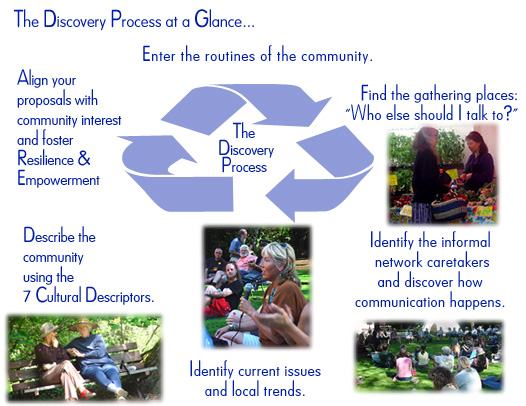
The basis of the approach is in Figure One: The Discovery Process. Fieldworkers describe the elements that make up a community: the physical/ecological, the social/cultural and the economic/political. Describing is an active process in real-time that reveals current communication patterns in a community, as well as interests and issues relevant to proposed actions.

We find “themes” (“We take care of our own here,” or “We’re ranching country around here”) which are general, widely-shared and reflect community values.

The Discovery Process at a Glance — core Social Ecology framework
Figure 1 — The Discovery Process at a Glance

Conceptual Frameworks

The following models guide Social Ecology fieldwork, community assessment, and policy engagement.

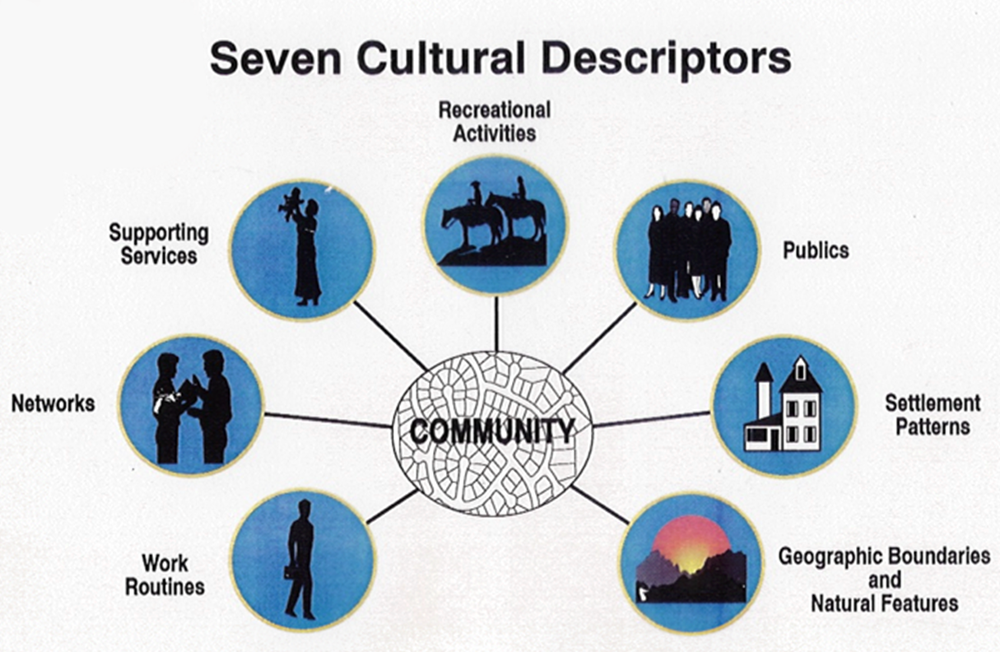
Cultural Descriptors framework
Cultural Descriptors — view full size
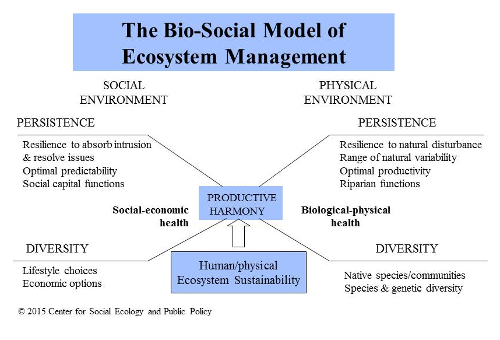
The Bio-Social Model
The Bio-Social Model — view full size
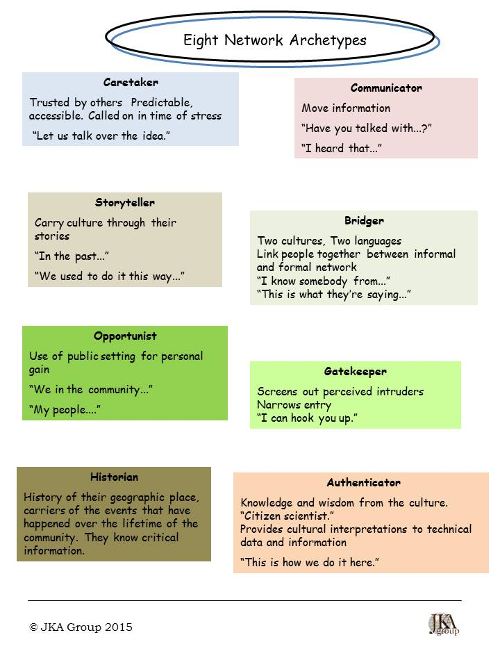
Community Archetypes
Community Archetypes — view full size
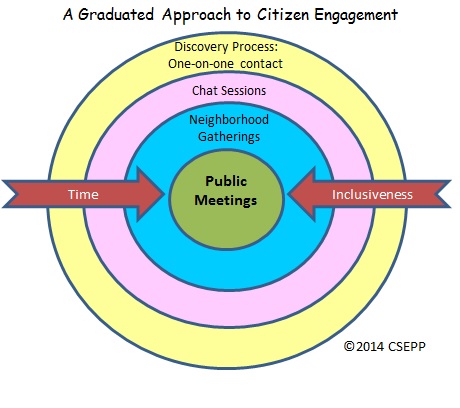
The Graduate Training Approach
Graduate Training Approach — view full size
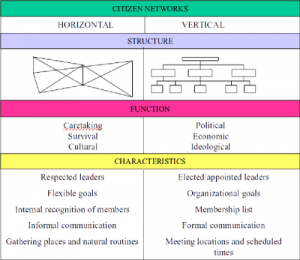
Formal and Informal Networks table
Formal & Informal Networks — view full size
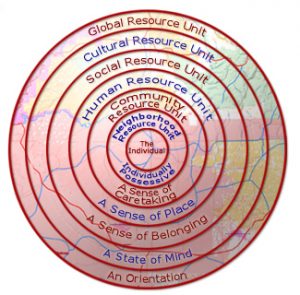
Levels of Resource Units
Levels of Resource Units — view full size
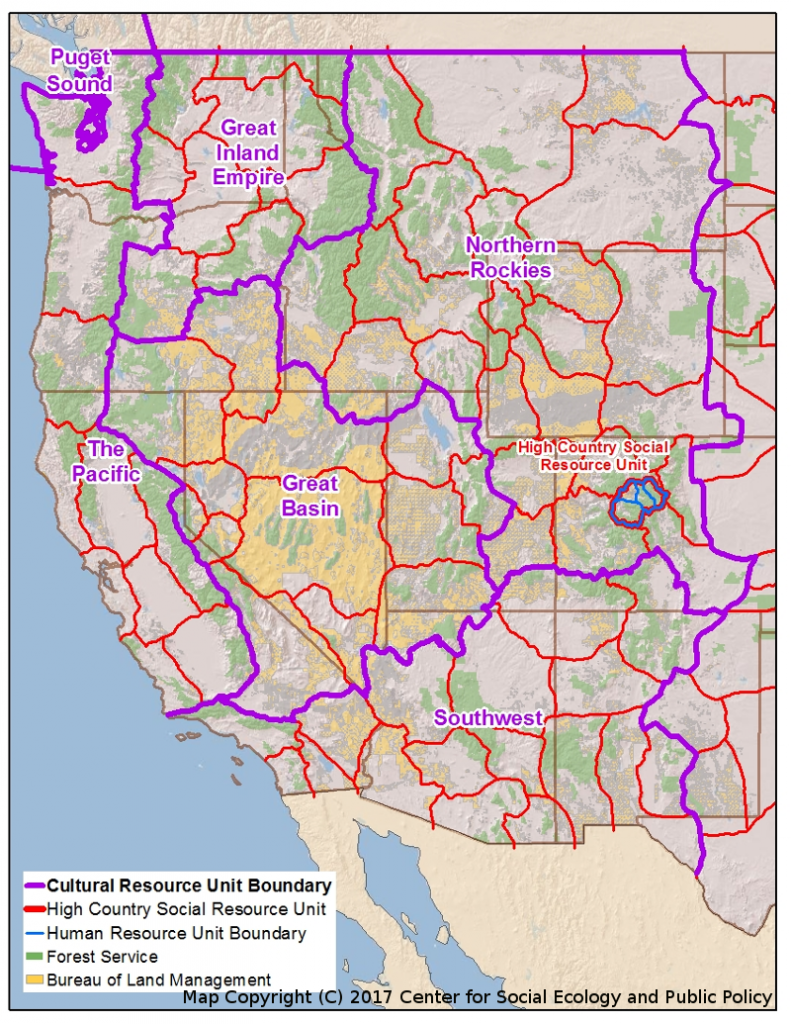
Western States Community Resource Units map
Western States Community Resource Units (CRUs) — view full size